Structured Data Monitoring Archive – 2483852651, 2108073820, 5084063335, 9632×97, 8162378786

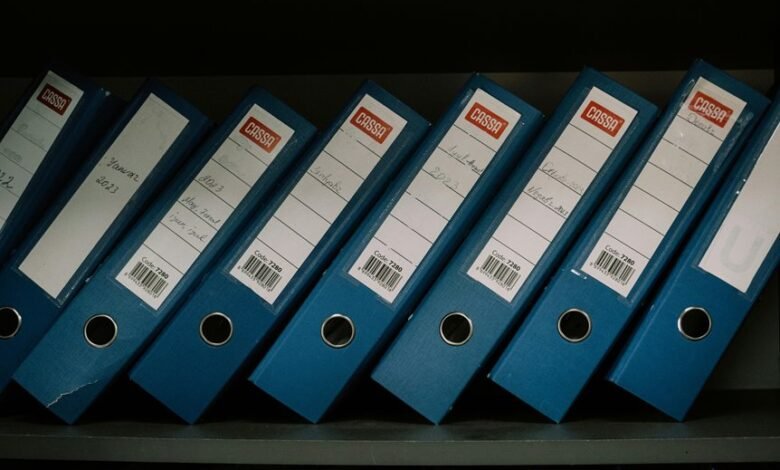
The Structured Data Monitoring Archive centralizes lineage, tagging, and policy-aligned controls across multiple data streams. It emphasizes auto-tagging, version history, and role-based access to support governance at scale. Real-time alerting links signals to preserve integrity amid diverse sources, while modular, immutable logs enable auditable accountability. The framework offers independent action within governance and measurable innovation. Stakeholders will find consistent rationales for integration, yet key decisions hinge on implementation details and operational constraints.
What Is the Structured Data Monitoring Archive and Why It Matters
The Structured Data Monitoring Archive (SDMA) is a centralized repository that stores, indexes, and tracks structured data monitoring efforts across systems and teams. It enforces data provenance through traceable lineage and supports policy alignment by mapping controls to objectives. Structured access, scalable taxonomy, and continuous auditing enable transparent governance while preserving freedom to innovate within compliant, repeatable processes.
How Auto-Tagging, Version History, and Access Controls Empower Governance
Auto-tagging, version history, and access controls collectively strengthen governance within the SDMA by enabling precise categorization, traceable evolution, and controlled visibility.
The approach supports auto tagging governance by standardizing metadata, while version history governance tracks changes, ensuring accountability and auditability.
Access controls enforce role-based access, aligning governance with risk tolerance, scalability, and freedom to innovate responsibly.
Real-Time Alerting and Integrity Across Diverse Data Streams
Real-time alerting and integrity across diverse data streams establish continuous vigilance by detecting anomalies, correlating signals, and triggering rapid responses. The framework emphasizes modular data provenance, scalable monitoring, and robust anomaly detection to maintain trust across sources.
It enables independent teams to act promptly while preserving accountability, consistency, and auditable history, ensuring transparent, freedom-focused decision-making within complex, heterogeneous environments.
Implementing the Archive in Your Workflow: Tips for Engineers, Analysts, and Auditors
How can engineers, analysts, and auditors integrate an archival framework into existing workflows without sacrificing performance or traceability?
The approach favors modular integration, standardized interfaces, and incremental adoption. Data lineage is preserved through immutable logs and versioned snapshots.
Risk assessment informs retention policies, access controls, and audit trails, enabling scalable governance without disrupting core analytics or operational throughput.
Frequently Asked Questions
Can the Archive Handle Non-Relational Data Formats Efficiently?
Non-relational efficiency is achievable, though dependent on data access patterns; the archive supports heterogeneous formats with modular indexing, scalable parsing, and adaptive storage layouts to balance throughput, flexibility, and query latency for diverse data structures.
How Is Data Privacy Enforced Within the Archive?
An allegory of guarded libraries shows data privacy enforced through strict access controls and encryption. The archive ensures data access is logged via audit trails, while systematic, scalable protocols deter disclosures and uphold user freedom within bounds.
What Are the Recovery Time Objectives for Outages?
Outage recovery objectives specify minimum acceptable downtime and recovery time targets, enabling systematic restoration. In terms of business continuity, recovery times are defined, measured, and tested to ensure scalable resilience across operations and freedoms without compromising stability.
Which APIS Are Available for External Integrations?
APIs for integration are provided for external data connectors, enabling scalable access. The system offers structured endpoints designed for reliability and freedom, supporting secure, interoperable integrations with external data sources through well-documented APIs for integration.
How Scalable Is the System for Growing Datasets?
Lightning-fast growth is supported; the system demonstrates strong scalability. The scalability assessment indicates linear resource scaling with data growth strategies, ensuring predictable performance. The approach emphasizes modular expansion, cost-aware optimization, and governance for freedom-driven data handling.
Conclusion
The archive operates as a structured backbone, aligning data with policy and traceable lineage. Its auto-tagging, version history, and access controls synchronize governance across teams, while real-time alerts tie signals into coherent responses. In practice, coincidences—data moments, access events, and audits—recur to reveal patterns of trust and risk. When these elements converge, engineers, analysts, and auditors observe a scalable, repeatable discipline: governance that evolves with data, not beyond it.